.svg)
.svg)

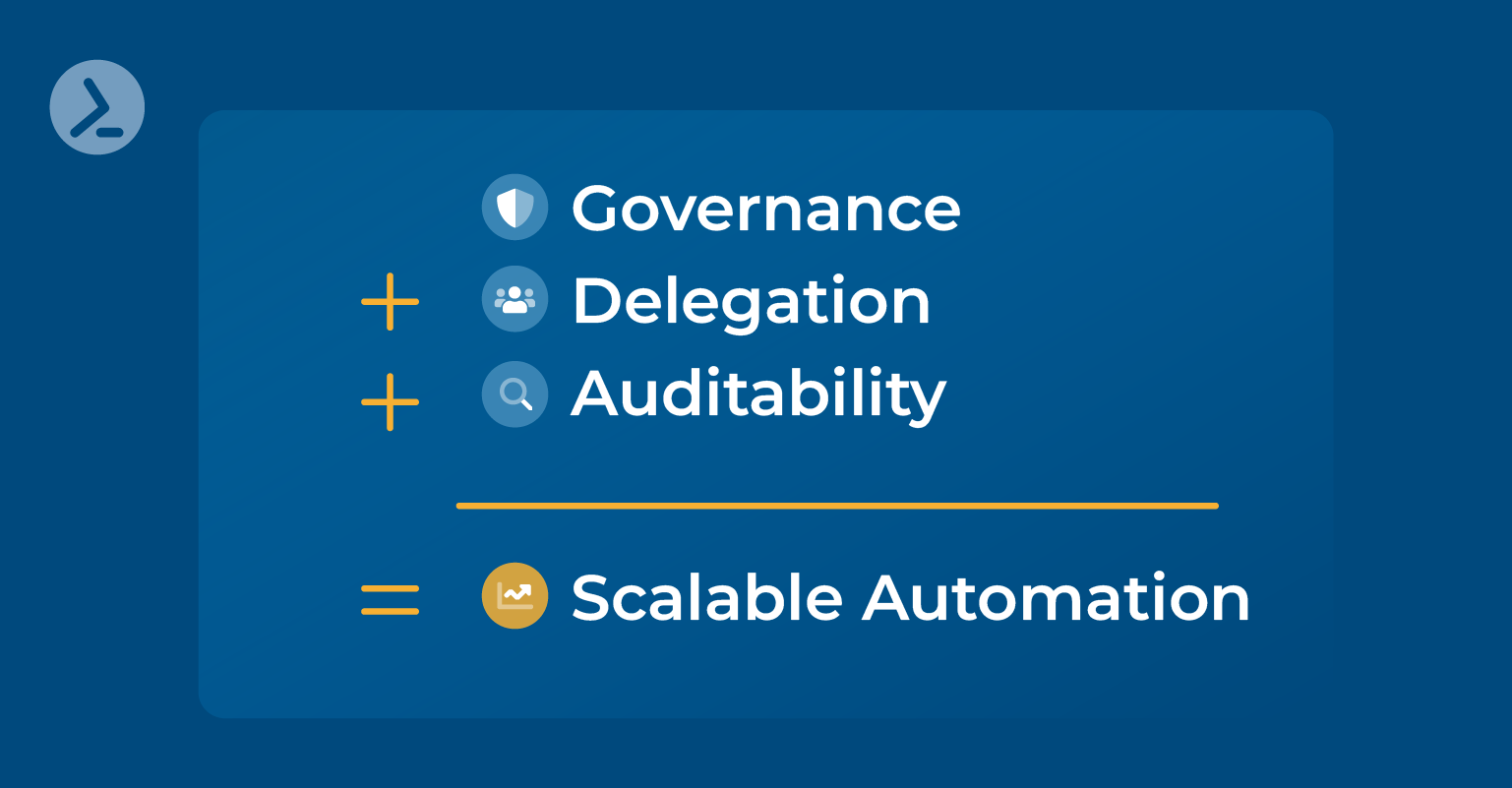
IT leaders recognize a growing challenge as more teams turn to automation to manage users, systems, and services. How can scalable automation be implemented across an organization without losing visibility or control? How can it support compliance requirements without becoming a burden? What needs to be in place to ensure that automation remains an asset as it grows?
Three things make or break your automation when you scale it. Governance, delegated execution, and auditability form the foundation for secure, scalable operations, particularly in environments where PowerShell serves as the primary scripting platform.

1. Governance Is the Starting Point for Scalable Automation
Most IT teams start with automation to eliminate repetitive tasks, but scalable automation requires structured governance from the beginning. Scripts reduce manual effort and bring consistency to operations. But as more systems and teams join these workflows, the initial simplicity disappears.
What happens when automation grows without structure? You end up with a bigger mess than you started with. Teams copy scripts, adjust, and execute them without documentation. Script ownership becomes murky. A slight change in one environment can break processes elsewhere. These risks spread quietly across your organization. You usually find out too late when things go wrong.
Governance frameworks prevent these risks by establishing clear automation management protocols.
A solid governance foundation answers four essential questions: Who can trigger automation? What are the conditions? Which controls apply? How does the organization record everything?
Automation becomes unmaintainable without this foundation. Organizational growth demands that automated actions remain transparent, traceable, and consistent across the enterprise. Governance frameworks give executive leadership enterprise-wide visibility and control over automation at scale across multi-thousand-user environments.
2. Delegated Execution Enables Scale Without Losing Control
Mature, scalable automation solutions face different challenges than early implementations. You need to extend automation beyond IT while keeping control. That's the challenge.
Service desks in large organizations still escalate thousands of routine tasks to administrators each month. Password resets, group membership changes, and mailbox migrations represent common examples from our customer base. These requests need advanced permissions, creating the kind of enterprise-wide bottlenecks that impact thousands of users and introduce systematic operational risks.
A more sustainable approach uses role-based delegation for these tasks, with validated scripts and predefined input parameters. Additional approval workflows can be configured to increase oversight while maintaining operational efficiency.

Time-critical environments with strict traceability requirements benefit from this delegation model. Healthcare organizations, financial institutions, and other regulated environments require both rapid response times and complete audit trails for routine IT operations.
By implementing this model, role-based rights assignment replaces individual account permissions. Automatic logging captures every action. Administrative teams retain script development and approval responsibilities while accelerating execution and improving security.
Strategic delegation transforms IT from a bottleneck into an enabler, distributing operational capabilities while maintaining enterprise security posture and executive oversight.
3. Auditability Turns Automation Into an Accountable Process
Organizations implementing scalable automation typically measure success by efficiency metrics. Your teams complete tasks substantially faster, dramatically reduce errors, and focus on strategic initiatives. However, efficiency alone is not enough when regulations are applied. In those cases, every automated action must be verifiable.
Audited systems trace automated actions in detail. Detailed logs capture who initiated the process, which scripts were executed, what parameters were used, and how the system responded. The log must be complete, tamper-resistant, and available for review.
Audit requirements extend beyond finance and healthcare to other industries. When you're dealing with ISO 27001, HIPAA, or NIS2, the board will ask tough questions about who has access to what. They must show complete traceability and governance across thousands of automated actions to satisfy regulatory audits.
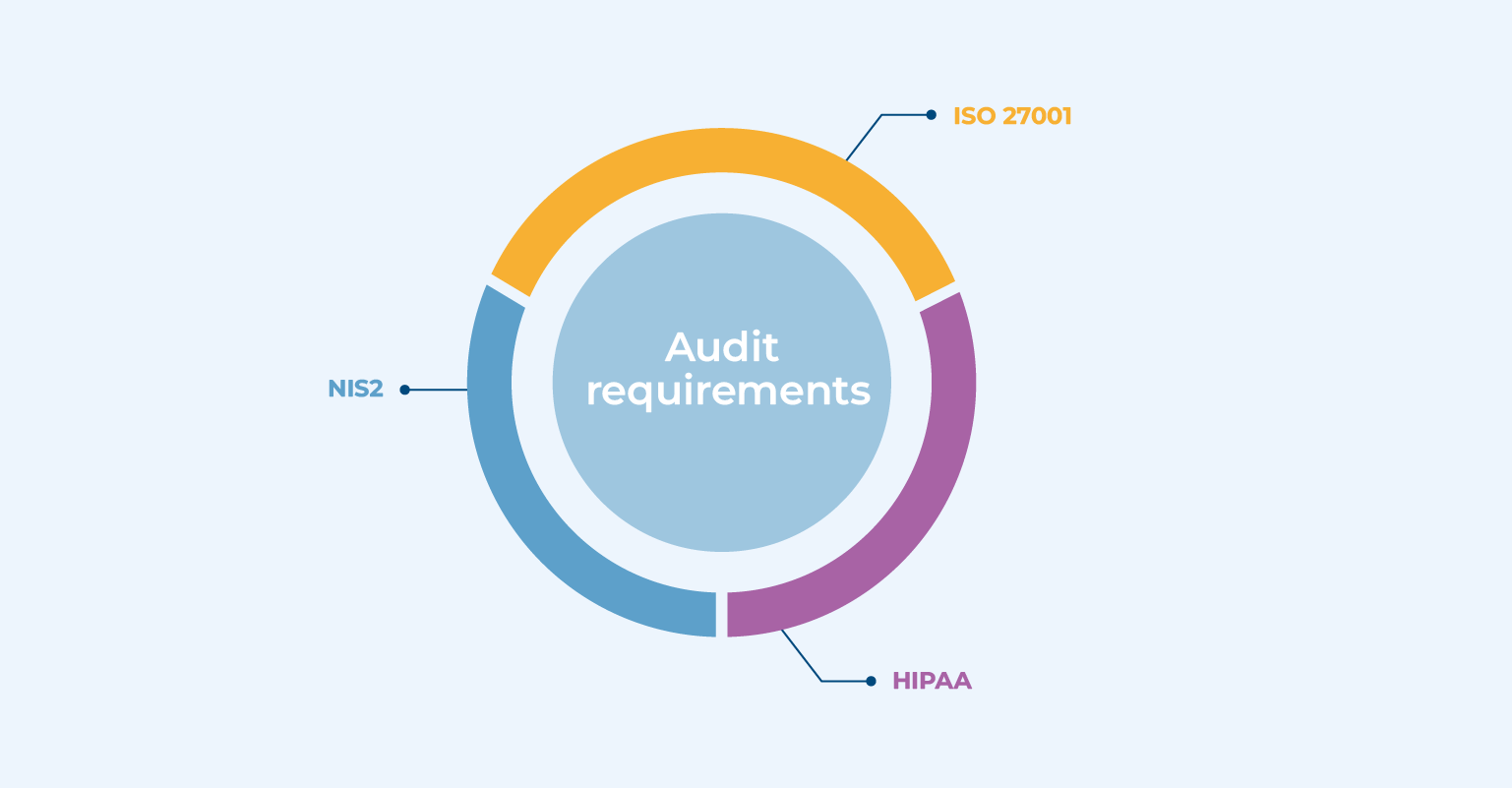
NIST Special Publication 800-53 Revision 5 provides a comprehensive framework for implementing these measures, including detailed security and privacy controls for organizations and information systems.
Standard PowerShell scripting falls short of these audit requirements. While PowerShell logs events locally and executes actions reliably, it lacks centralized logging, role separation, and workflow approvals.
Organizations require an additional platform layer for policy-controlled automation. Our webinar on PowerShell Security Best Practices provides in-depth coverage of secure credential management and delegated script execution.
Compliance becomes easier to demonstrate and sustain when auditability is part of the automation framework.
4. Governance Structures Make Automation Operationally Sustainable
Scalable automation delivers long-term value when it becomes part of daily operations. Sustainable success requires more than working scripts. It demands a structured automation framework defining who executes, approves, and maintains each process.
Sustainable governance models provide teams with a structured process for reviewing, approval, and distributing enterprise automation. They separate the roles of script authors, reviewers, and executors while ensuring policies are enforced rather than just documented.
Automation must follow a clear operational structure to work reliably at scale. Well-governed environments ensure scripts are stored in reviewed repositories, linked to approval processes, restricted by role-based access, and supported by comprehensive audit logs.
Getting this right means your automation grows in tandem with your organization, rather than against it. That's where ScriptRunner becomes the beating heart of your automation strategy, giving you the governance and control you need to scale without the headaches. The platform delivers controlled delegation, transparent approvals, and complete audit trails for every automated action.
To explore best practices for secure scripting and delegated automation in more depth, watch our expert webinar on PowerShell Security.
What’s next?
Take governance automation across your entire IT infrastructure. API Integration Strategy for Scalable Enterprise Automation shows you how.