Replace

Ansible

with Scriptrunner

Purpose-built for Microsoft Ecosystems.
Native by design, not bolted on like our competitors.


For Enterprise IT Teams Running Microsoft‑centric Environments
Cut Ticket Volume, Standardize Scripts, And Stay Audit‑ready

Dundee Precious Metals LogoBooking.com LogoUzin_utzRaymond Chabot LogoDrexel_Universitynavy-copy-svBechtle LogoMaine HealthGetinge Logo

Why users prefer ScriptRunner?

Enterprise‑grade credential security

Credentials are stored in a secure vault with RBAC and zero exposure. Ansible relies on YAML vault files or external systems, which require additional configuration and do not provide native PowerShell‑specific credential handling

Immediate productivity for PowerShell admins

PowerShell admins can be productive instantly without learning YAML, Linux tooling, or managing complex WinRM setup required on every Windows target

Native, direct PowerShell execution

PowerShell runs natively with full Windows authentication, DPAPI access, and proper credential delegation — unlike Ansible’s non‑interactive WinRM model, which restricts Windows APIs, breaks double‑hop delegation, and prevents DPAPI usage

Integrated reporting, audit trails, and governance

Every automation action has built‑in audit logs, reporting, and dashboards. In contrast, Ansible requires external systems (e.g., Splunk, ELK, SIEM tools) to achieve full visibility

Rich self‑service forms and delegation capabilities

Non‑technical users can run operational tasks through dynamic forms with validation and AD lookups — something Ansible’s job templates cannot provide since they require understanding YAML playbooks

Why consider ScriptRunner as a
replacement for  

Ansible

SR vs. Ansible - Platform (ops‑grade vs dev‑toolkit)
Overview
Operational Risk
Time-to-Value
Target Persona Fit
Scaling & HA
ScriptRunner
Enterprise-grade automation and orchestration platform with policy-driven governance, scalability, and audit readiness for operational excellence
Scripts run in controlled environments with policies and approvals, reducing the chance that “one bad script” destabilizes the platform
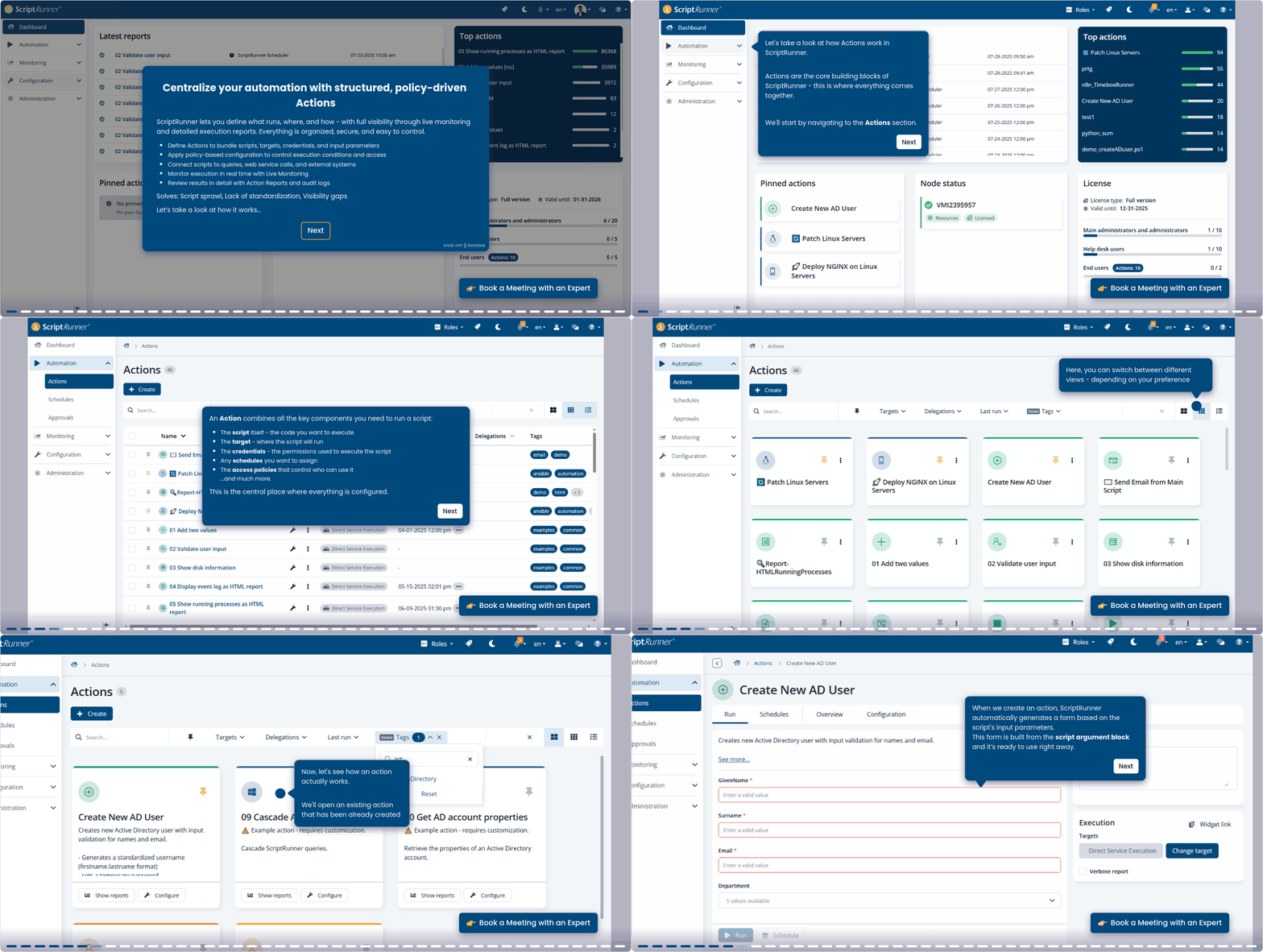
Admins get usable, governed automation quickly through templates and connectors, without having to build an app framework first
Aligns with IT ops realities: tickets, change windows, compliance audits, onboarding/offboarding, and cross‑team execution
Marketed explicitly for HA and horizontal scaling as a central automation and orchestration platform across the enterprise
Ansible
An Infrastructure‑as‑Code engine built for provisioning and configuration—not for day‑to‑day operational automation
Its Windows automation layer relies on a non‑interactive, emulated WinRM bridge that cannot access DPAPI, breaks credential delegation, limits Windows API functionality
Before any operational automation becomes usable, teams must build out Linux controllers, engineer YAML playbooks, and configure WinRM across the estate
The entire model is tailored for DevOps engineers who build infrastructure, not for IT operations, service desks, or business stakeholders
Scaling hinges on node‑based licensing, Linux control node expansion, and IaC maintenance overhead
SR vs. Ansible - Automation Model
Agentic Automation
Workflows
Task Automation
Scheduling
Automation Area
ScriptRunner
Delivers agentic automation with built-in governance, enabling secure, policy-driven orchestration across Microsoft ecosystems. It’s AI-powered, scalable, and compliance-ready
Automates and orchestrates complete workflows (webhook, event-driven, interactive, scheduled) with built-in governance, delegation, and compliance
Delivers secure, policy-driven task automation with intelligent workflows, enabling centralized orchestration, central script repository, compliance, and delegated execution
Offers enterprise-grade scheduling (controlled and delayed) enabling secure, policy-driven execution with centralized orchestration, compliance, and audit-ready workflows
Enables secure, governed automation across all major IT environments, including Public Cloud (Azure, Microsoft 365), Private Cloud, Hybrid Cloud, Data Centers, and Infrastructure
Ansible
Delivers automation through a non‑interactive, emulated Windows execution layer that cannot leverage native Windows capabilities
Workflows revolve around Infrastructure‑as‑Code concepts, meaning everything must be engineered as YAML playbooks
Task execution relies on pushing scripts through a non‑native Windows remoting layer that limits access to DPAPI, breaks credential delegation, and imposes constraints on Windows APIs
Scheduling is not an operational strength; tasks must be triggered through IaC pipelines or external orchestrators
Optimized for infrastructure provisioning across Linux, network devices, cloud platforms, and containers.
SR vs. Ansible - Enterprise Governance & Business Enablement (Overview)
Compliance & Audit Readiness
Safe Delegation & Self-Service
Scalability & Reliability
Version Control & Policy Enforcement
Business Outcomes & ROI
ScriptRunner
Built-in credential vaults, RBAC, and audit-ready logs ensure regulatory compliance without manual effort
Secure portals and forms empower non-technical users while maintaining governance and control
Multi-node execution and SLA-backed performance deliver consistent automation at enterprise scale
Centralized versioning and policy-driven workflows prevent privilege sprawl and unauthorized changes
Accelerates time-to-value with prebuilt templates, reducing risk and lowering TCO for measurable ROI
Ansible
Built for infrastructure provisioning, not governance. Lacks native audit trails, DPAPI access, delegated identity control, and Windows‑grade compliance capabilities
Engineered for DevOps experts, offering no dynamic forms, parameter validation, or governed delegation
Scales for large IaC estates but introduces operational fragility through Linux‑first controllers, WinRM limitations, and complex multi‑node configurations
Relies on Git and YAML for infrastructure code but provides no built‑in policy enforcement, centralized governance, or controlled execution
Delivers value only at massive infrastructure scale; long onboarding, heavy engineering effort, and Windows execution
SR vs. Ansible - Delegation, security & compliance (built‑in vs build‑it‑yourself)
Delegation Model
Self‑Service UX
Approvals & Change
Audit & Compliance Stance
Security
ScriptRunner
Opinionated, policy‑driven delegation out of the box: who can run what, where, and with which parameters is a first‑class concept
Non‑admins use a ready‑made Delegate portal; admins publish safe actions and ScriptRunner generates the UI
Integrated approval workflows and change tracking make it straightforward to align with ITIL and audit demands
Designed to be professional in front of auditors: central logs, reports, and clear role/rights separation
Built-in credential vaults, RBAC, approval workflows, audit-ready logs, and safe delegation portals for non-technical users
Ansible
Designed for engineers, not operators. Requires YAML and infrastructure knowledge, with no governed delegation model—making safe, role‑specific task execution impossible for operational teams
Provides no native forms, validation, or safe interfaces. Non‑technical users face YAML, templates, or manual workarounds, blocking broad operational adoption and safe task execution
Lacks built‑in approvals, forcing external tools for validation and oversight. Governance becomes fragmented, increasing risk in environments requiring consistent, auditable operational control
Requires external logging stacks for visibility. Missing native audit trails, identity controls, and DPAPI‑level security, creating compliance gaps across Windows‑based operational environments
Relies on non‑native, emulated Windows execution that breaks credential delegation, limits API access, and forces credentials into scripts—introducing systemic governance and security weaknesses
SR vs. Ansible - Integrations, extensibility & support (platform vs. cloud toolbox)
Integration Stack
ITSM & Monitoring
Extensibility Model
Operational Complexity
Support & Safety Net
ScriptRunner
Native Microsoft ecosystem integration, ITSM connectors, IdM integrations, and enterprise-grade support with SLAs
Comes with patterns and connectors for ServiceNow, Jira, Matrix42, PRTG, Icinga, SCOM and more
Extend by adding new PowerShell actions into a governed framework - The platform enforces consistency
Designed to reduce day‑2 complexity: central monitoring of runs, standardized delegation, and reporting as table stakes
Enterprise‑grade support, guidance, and patterns tailored to IT operations teams, not just developers, plus SLA‑backed help and onboarding
Ansible
Focused on multi‑platform IaC, requiring YAML modules and external controllers. Integration depends on Linux‑first architecture and add‑ons, increasing effort for Windows‑centric operational environments
Relies on external dashboards, SIEM tools, and third‑party pipelines for visibility and reporting, creating fragmented monitoring and complicating operational governance across Microsoft‑heavy estates
Extensibility depends on YAML playbooks and infrastructure code, forcing teams to build operational logic manually instead of leveraging governed, ready‑to‑use PowerShell‑native automation capabilities.
Linux control nodes, WinRM setup, external logging stacks, and IaC pipelines create operational drag, increasing overhead for teams needing simple, governed automation across Windows environments.
General‑purpose enterprise support focuses on IaC use cases, not operational governance. Achieving compliance, reporting, and safe delegation requires extra tooling, expertise, and ongoing engineering effort
SR vs. Ansible - Platform (ops‑grade vs dev‑toolkit) ScriptRunner Ansible
Overview Enterprise-grade automation and orchestration platform with policy-driven governance, scalability, and audit readiness for operational excellence An Infrastructure‑as‑Code engine built for provisioning and configuration—not for day‑to‑day operational automation
Operational Risk Scripts run in controlled environments with policies and approvals, reducing the chance that “one bad script” destabilizes the platform Its Windows automation layer relies on a non‑interactive, emulated WinRM bridge that cannot access DPAPI, breaks credential delegation, limits Windows API functionality
Time-to-Value Admins get usable, governed automation quickly through templates and connectors, without having to build an app framework first Before any operational automation becomes usable, teams must build out Linux controllers, engineer YAML playbooks, and configure WinRM across the estate
Target Persona Fit Aligns with IT ops realities: tickets, change windows, compliance audits, onboarding/offboarding, and cross‑team execution The entire model is tailored for DevOps engineers who build infrastructure, not for IT operations, service desks, or business stakeholders
Scaling & HA Marketed explicitly for HA and horizontal scaling as a central automation and orchestration platform across the enterprise Scaling hinges on node‑based licensing, Linux control node expansion, and IaC maintenance overhead
SR vs. Ansible - Automation Model ScriptRunner Ansible
Agentic Automation Delivers agentic automation with built-in governance, enabling secure, policy-driven orchestration across Microsoft ecosystems. It’s AI-powered, scalable, and compliance-ready Delivers automation through a non‑interactive, emulated Windows execution layer that cannot leverage native Windows capabilities
Workflows Automates and orchestrates complete workflows (webhook, event-driven, interactive, scheduled) with built-in governance, delegation, and compliance Workflows revolve around Infrastructure‑as‑Code concepts, meaning everything must be engineered as YAML playbooks
Task Automation Delivers secure, policy-driven task automation with intelligent workflows, enabling centralized orchestration, central script repository, compliance, and delegated execution Task execution relies on pushing scripts through a non‑native Windows remoting layer that limits access to DPAPI, breaks credential delegation, and imposes constraints on Windows APIs
Scheduling Offers enterprise-grade scheduling (controlled and delayed) enabling secure, policy-driven execution with centralized orchestration, compliance, and audit-ready workflows Scheduling is not an operational strength; tasks must be triggered through IaC pipelines or external orchestrators
Automation Area Enables secure, governed automation across all major IT environments, including Public Cloud (Azure, Microsoft 365), Private Cloud, Hybrid Cloud, Data Centers, and Infrastructure Optimized for infrastructure provisioning across Linux, network devices, cloud platforms, and containers.
SR vs. Ansible - Enterprise Governance & Business Enablement (Overview) ScriptRunner Ansible
Compliance & Audit Readiness Built-in credential vaults, RBAC, and audit-ready logs ensure regulatory compliance without manual effort Built for infrastructure provisioning, not governance. Lacks native audit trails, DPAPI access, delegated identity control, and Windows‑grade compliance capabilities
Safe Delegation & Self-Service Secure portals and forms empower non-technical users while maintaining governance and control Engineered for DevOps experts, offering no dynamic forms, parameter validation, or governed delegation
Scalability & Reliability Multi-node execution and SLA-backed performance deliver consistent automation at enterprise scale Scales for large IaC estates but introduces operational fragility through Linux‑first controllers, WinRM limitations, and complex multi‑node configurations
Version Control & Policy Enforcement Centralized versioning and policy-driven workflows prevent privilege sprawl and unauthorized changes Relies on Git and YAML for infrastructure code but provides no built‑in policy enforcement, centralized governance, or controlled execution
Business Outcomes & ROI Accelerates time-to-value with prebuilt templates, reducing risk and lowering TCO for measurable ROI Delivers value only at massive infrastructure scale; long onboarding, heavy engineering effort, and Windows execution
SR vs. Ansible - Delegation, security & compliance (built‑in vs build‑it‑yourself) ScriptRunner Ansible
Delegation Model Opinionated, policy‑driven delegation out of the box: who can run what, where, and with which parameters is a first‑class concept Designed for engineers, not operators. Requires YAML and infrastructure knowledge, with no governed delegation model—making safe, role‑specific task execution impossible for operational teams
Self‑Service UX Non‑admins use a ready‑made Delegate portal; admins publish safe actions and ScriptRunner generates the UI Provides no native forms, validation, or safe interfaces. Non‑technical users face YAML, templates, or manual workarounds, blocking broad operational adoption and safe task execution
Approvals & Change Integrated approval workflows and change tracking make it straightforward to align with ITIL and audit demands Lacks built‑in approvals, forcing external tools for validation and oversight. Governance becomes fragmented, increasing risk in environments requiring consistent, auditable operational control
Audit & Compliance Stance Designed to be professional in front of auditors: central logs, reports, and clear role/rights separation Requires external logging stacks for visibility. Missing native audit trails, identity controls, and DPAPI‑level security, creating compliance gaps across Windows‑based operational environments
Security Built-in credential vaults, RBAC, approval workflows, audit-ready logs, and safe delegation portals for non-technical users Relies on non‑native, emulated Windows execution that breaks credential delegation, limits API access, and forces credentials into scripts—introducing systemic governance and security weaknesses
SR vs. Ansible - Integrations, extensibility & support (platform vs. cloud toolbox) ScriptRunner Ansible
Integration Stack Native Microsoft ecosystem integration, ITSM connectors, IdM integrations, and enterprise-grade support with SLAs Focused on multi‑platform IaC, requiring YAML modules and external controllers. Integration depends on Linux‑first architecture and add‑ons, increasing effort for Windows‑centric operational environments
ITSM & Monitoring Comes with patterns and connectors for ServiceNow, Jira, Matrix42, PRTG, Icinga, SCOM and more Relies on external dashboards, SIEM tools, and third‑party pipelines for visibility and reporting, creating fragmented monitoring and complicating operational governance across Microsoft‑heavy estates
Extensibility Model Extend by adding new PowerShell actions into a governed framework - The platform enforces consistency Extensibility depends on YAML playbooks and infrastructure code, forcing teams to build operational logic manually instead of leveraging governed, ready‑to‑use PowerShell‑native automation capabilities.
Operational Complexity Designed to reduce day‑2 complexity: central monitoring of runs, standardized delegation, and reporting as table stakes Linux control nodes, WinRM setup, external logging stacks, and IaC pipelines create operational drag, increasing overhead for teams needing simple, governed automation across Windows environments.
Support & Safety Net Enterprise‑grade support, guidance, and patterns tailored to IT operations teams, not just developers, plus SLA‑backed help and onboarding General‑purpose enterprise support focuses on IaC use cases, not operational governance. Achieving compliance, reporting, and safe delegation requires extra tooling, expertise, and ongoing engineering effort

Don't miss the opportunity to scale now

Book Demo
ScriptRunner Logo light